
01
Built from the client's own data.
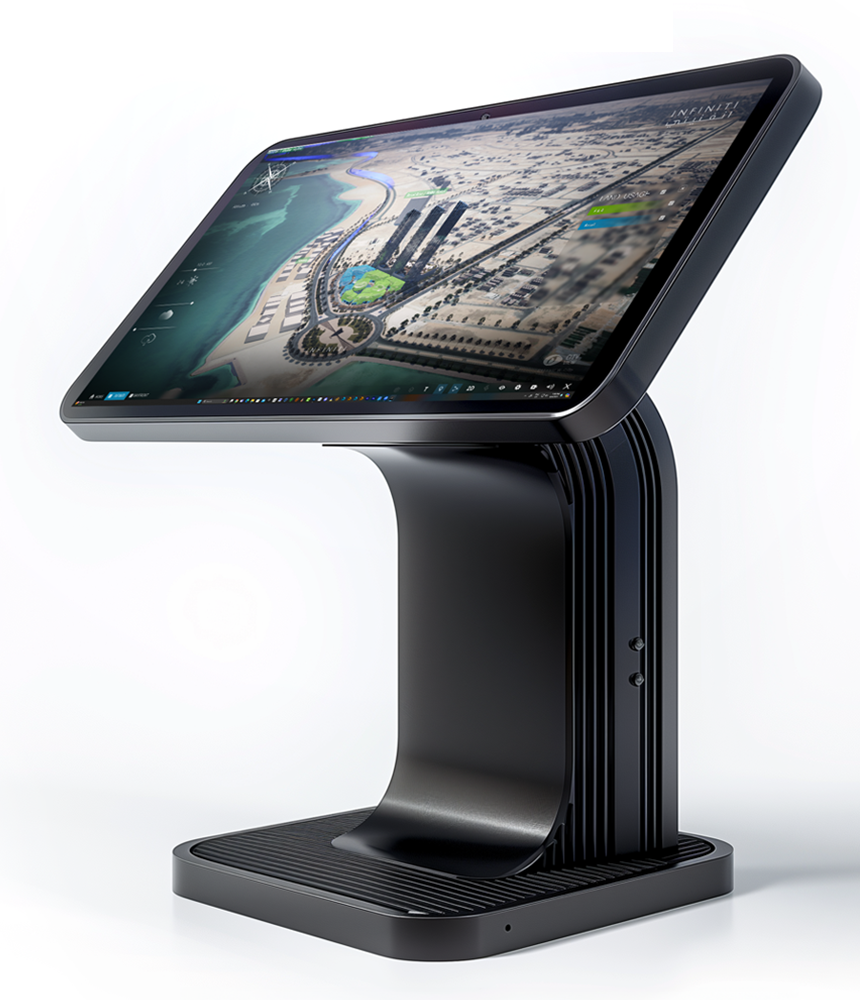
Not an artist's impression of a development — the development itself, built from the client's masterplan, survey and sales data. What appears on screen is what has been approved, phased and priced.

Establishing survey points
000%
About CityView
A development that exists only on paper is hard to sell. The physical model was the old answer — expensive, fixed, and out of date the moment a phase changed. CityView is the live one.
01
Not an artist's impression of a development — the development itself, built from the client's masterplan, survey and sales data. What appears on screen is what has been approved, phased and priced.
02
The model is live. A client's question is answered while they are still asking it — filter by phase, drop into a plot, check what is still available — rather than deferred to a follow-up email.
03
Muharraqi Studios has built architectural visualisation since 2004. CityView came out of that work, which is why it is judged on how a development looks and feels, not only on what the system can do.
04
Developed in Manama and installed across Bahrain and Saudi Arabia, in sales centres where projects are actually sold.
05
CityView has not stood still since 2018. Capability is added continuously, and most of it comes from what a client needed while presenting a real development. Nothing is retired to make room — the platform grows, and installed systems grow with it.
The story
The studio started this product by asking how to improve a client's connection to a project using tools already familiar to everyone. The aim was something intuitive and instantly accessible.
Development began around 2016, and the first system went into a sales centre in 2018.
In development
Two directions are in development. The first is simulation — the ability to operate and experience an environment rather than only navigate it, already applied on a transport project and expanding from there. The second is history: using the same system to reconstruct landmarks and monuments as they once stood, and let a visitor move through them. A platform built to show what has not been built yet turns out to work just as well on what no longer exists.